
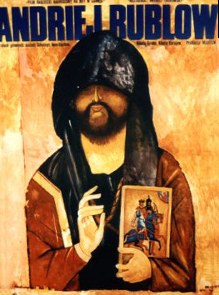
 Director: Andrei Tarkovsky
Writers: Andrei Konchalovsky, Andrei Tarkovsky
Release Date: 1971 (Soviet Union)
Awards: Cannes Film Festival 1969 (FIPRESCI Prize), French Syndicate of Cinema Critics 1971 (Critics Award Best Foreign Film), Jussi Awards 1973 (Jussi Foreign Film)
Runtime: Soviet Union:165 min (re-edited version) / Soviet Union:186 min (re-edited version) / UK:183 min (2004 re-release) / 205 min (original length) / UK:145 min (UK version)
Country: Soviet Union
Language: Russian / Italian / Tatar
Color: Black and White / Color
As the prologue to Tarkovsky’s film on the life and times of Russian iconographer Andrei Rublev draws to a close, there is a moment that perfectly encapsulates its underlying themes. A man lies helpless on the icy ground. At his side, dark against the pristine whiteness of the snow, lie the tattered remains of a primitive hot-air balloon. It deflates slowly, mirroring the final breaths of its master. Creator and created alike are the victims of an absurd ambition; man has tried to walk among the clouds, only to fall back once again to earth.
Strangely, we never learn the identity of this man. But just as the maddeningly deliberate camera movements and casual, off-hand depiction of suffering serve as a harbinger of things to come, so too does this scene serve as the ultimate paradigm for the events that follow. The question raised by this image is repeated time and again throughout the film, and in no clearer distillation than in the struggles of the title character.
The film is divided into a prologue, epilogue, and seven “chapters.” This structure suggests a traditional storyline of some sort, but Tarkovsky makes every effort to avoid such clear distinctions. The film's numerous flashbacks often give no clues as to where they fit temporally. Andrei Rublev himself is only occasionally the central figure; in fact, several of the secondary characters receive much closer scrutiny. Yet his presence looms large, serving as a reference point amidst the confusing puzzle of events.
As the film opens, Rublev and his two monastic companions take shelter from a sudden storm in a small, dilapidated barn. They find themselves in the company of several peasants and a jester, who amuses his cohorts by performing comedic routines for them, including several that openly ridicule the friars. One of the three monks, known only as Kiril, points the jester out to local authorities, who brutally beat him for his insolence.
Andrei and his friends make their way to the monastery at Andronikov. Soon after their arrival, he is summoned by the Grand Prince to assist Theophanes – an iconographer of immense artistic and spiritual stature – in painting the Cathedral of the Annunciation in Moscow. Together, they struggle to understand the impact of their work, and to recognize the role of an artist in society.
After completing his studies under Theophanes, Andrei travels to Vladimir on commission from the Grand Prince. Breaking away from his followers, he watches as the local pagans engage in a night of unbridled lust and baffling ceremonies. Upon being captured by the pagans, he is confronted by a beautiful sorceress, who tests his vows and beliefs before helping him to escape.
When Andrei reaches the chapel in Vladimir, he finds himself unable to paint the traditional icons of his original commission. Instructed to depict the Last Judgment, he refuses to paint something so clearly intended to terrify. The entrance of a feeble-minded woman, Durochka, underscores his conflict. Inspired by her innocence, he chooses to represent the Last Judgment as a feast, rather than a tribunal.
Meanwhile, external political matters become increasingly urgent. The Grand Prince’s jealous younger brother brokers an agreement with the enemy Cossacks, and moves on Vladimir. Virtually unopposed, the invaders sweep through the city. The defenseless villagers barricade themselves in the newly completed chapel, but earn only a momentary respite. As the attackers begin to systematically rape, torture, and murder all unfortunate enough to survive, Andrei kills one of the Cossacks marauders attacking Durochka.
Miraculously, both survive the raid, but Rublev is appalled by the crime he has committed. He vows to never paint or speak again, in an effort to atone for what he sees as a grave sin. Accompanied by Durochka, who serves him as a constant reminder of his offense, Andrei returns to Andronikov. There he encounters Kirill, his early companion, who pleads with him to resume painting. But Andrei is resolute; nothing will convince him to again take up his art.
Some years later, Andrei makes his way to Kiev. There, the Grand Prince marshals his resources and his workmen in an effort to create a massive bell. The entire project is supervised by a young boy who works tirelessly on every detail of the founding. Unbeknownst to his superiors and subordinates alike, he has no idea how to cast a bell of this size, but proceeds on faith and effort alone. After months of backbreaking work, the new bell is completed and rings out for the first time. As it sounds, Andrei is dramatically altered, and vows once again to take up his art for the greater glory of God.
Throughout this journey of trial and redemption, Tarkovsky weaves many seemingly unrelated threads. The complex, disconnected style of the film is reminiscent of another Russian master: Leo Tolstoy. Like Tolstoy’s magnum opus, War and Peace, Tarkovsky’s film is a sprawling epic and an incredibly ambitious work. Like Tolstoy, he makes use of shifting story lines and seemingly incidental characters, all anchored by a central theme. And perhaps most like Tolstoy, his film works much better when he allows the protagonists to act out this theme rather than talk about it. But what is this theme?
The answer to this question lies in the now clearly essential opening prologue. There, we see the tragic result of a man’s efforts to create. But we also see the moments of glory that accompany that tragedy; the two go hand in hand. In Tarkovsky’s eyes, art is a creation wrung from the very being of the artist. It is this investigation and understanding of art that drives the film. Both Rublev and Tarkovksy seek to comprehend art in its very essence. Both struggle to understand how an artist relates to his historical surroundings, his fellow humans, and perhaps most importantly, his divine audience.
The fact that the title character and Tarkovsky share the same name cannot be a coincidence. Indeed, the director struggles with many of the same issues that plague his protagonist. Like Rublev, he experiences periods of sterility and self-doubt. Like Rublev, he finds what he seeks, though not without great effort. And again like Rublev, Tarkovsky is unsure of his focus in the early going. The first scenes, in particular, are bogged down in philosophical language where the characters seem to be speaking more to the audience than to one another. This, combined with Tarkovsky’s particularly deliberate style, can make the film’s initial sections difficult.
As the narrative progresses, it grows surer of itself. Rather than using his characters as mouth-pieces for his philosophies, Tarkovksy begins to let their actions speak for themselves. In particular, the film seems to take a drastic step forward with the Raid of Vladimir. Tarkovksy’s long takes and deliberate pacing are a constant; every shot is perfectly composed, and every sequence has a poetic, mesmerizing tempo. But the raid sequence introduces something new to the equation: rapid, dramatic action. The combination is dynamic, and from this point on the film builds steadily. Tarkovsky has found his creative voice. (Interestingly, it occurs just as Rublev himself falls silent.)
The Raid is one of the finest set pieces ever put to celluloid. But Tarkovsky follows it up with an even greater piece: the forging and ringing of the giant bell. As it tolls out over the countryside, the young bell smith realizes he has created something truly extraordinary; he has succeeded beyond his wildest expectations. In this moment, Tarkovsky provides the answer to his protagonist’s (and his own) most pressing question. The incredible dedication and sacrifice for the sake of his creation inspires the monk and director alike. Andrei remembers why it is that he used to paint, and more importantly, why he must paint again.
Prior to the epilogue, the film is stark, shot in high-contrast black and white. But as Rublev rediscovers his art, the audience is bombarded with spectacular colors. In this epilogue, Tarkovsky introduces the crowning achievements of Andrei Rublev’s career in an almost experimental format. The colors are brilliant, the music powerful, and the images mesmerizing. Above all, this final segment is a tribute to Rublev the artist.
Tarkovsky explores - through Rublev’s own trials and the trials of others - the power and sacrifice that accompanies every artist. One might object to various aspects of the film – (such as its historical inaccuracies, its casual brutality, its tendency to philosophize, or its difficult style) – but if those can be overcome, there is no denying its power. Tarkovsky, like Rublev, has undergone a transformation. He has come to understand clearly why he is compelled to create. And in so doing, he has produced a true work of art.
©Joseph Susanka

15 July 2007
Andrey Rublyov (1969)

10 July 2007
Solyaris (1972)
 Director: Andrei Tarkovsky
Writers: Stanislaw Lem (novel)
Fridrikh Gorenshtein (screenplay)
Release Date: 20 March 1972 (Soviet Union)
Awards: Cannes Film Festival 1972
(FIPRESCI Prize, Grand Prize of the Jury)
Runtime: 165 min
Country: Soviet Union
Language: German / Russian
Color: Black and White / Color (Sovcolor)
Solaris deals nominally with a voyage into outer space and with contact between humans and an alien life form. However, beneath these standard science-fiction trappings it is a film about man's struggle with his conscience and with the past, about what it means to be human, about memory and loss--and probably many other things as well. The film's subtle power stems from its ability to yield many interpretations and meanings, and the viewer must decide what to make of the beautiful images and elliptical story line. It is filmmaking of the most important and artful kind: masterful cinematic technique in a work that is both puzzling and revealing.
The film subverts certain conventions of the science-fiction genre, often substituting present-day observations for technological fantasies. Instead of Kelvin's logistical preparations for space travel and his subsequent blast-off, we are given a more commonplace travel scenario: an extended highway montage of the offended Burton's car ride home. This initially puzzling sequence, complemented by obscured futuristic sound effects, threatens to languorously break away from the film into its own kind of nonnarrative poetry. It culminates in a stylized vision of modern transportation, a nighttime image of a thousand automobiles painting on the darkness with their streaking lights. The filmmakers surround these abstract travelling shots with lush, static scenes in the countryside and, before ever leaving the Earth, suggest how truly alien different regions and lifestyles can be to each other.
On a strictly aesthetic level, Solaris forms a brilliant visual, rhythmic, and sonic combination. The tracking shots in the space station's hallways give the area a real sense of depth and also create an ominous mood. The film's many long takes provide time for the viewer to take in the carefully constructed aspects of mise-en-scene. For example, the station is not a stylishly antiseptic area, but a cluttered and lived-in place explored in numerous medium shots. Additionally, the music (by the talented Eduard Artemyev) perfectly complements the spiritual and mysterious nature of the film. Save for one classical piece, the score is composed of a collection of barely audible pulses and low whirrings that complement the somber futuristic narrative. All of these stylistic elements come together most memorably during the sequence when Kris first sees the duplicated form of his wife, Hari. It is a subtle scene of astonishing beauty that shows how well cinema can express moods and emotions without being simplistic or melodramatic.
At first completely dependent on Kris, Hari's double begins to mature into her own entity. She makes a moving declaration of her humanity during an argument with Sartorius and stays behind in the library when Kris wanders off with the drunken Snauth. Kris is distressed when he realizes that Hari has been left alone, and it is becoming clear that he needs her now as much as she needs him. He rushes back only to find her oblivious to his absence and intently focused on a painting of a village in winter (specifically, Return of the Hunters by Pieter Bruegel). It is in this scene where the film espouses art as a mirror of reality, as a tool for understanding the world and significant in Hari's development as an individual. The camera follows her gaze across the surface of the work in a way that is profoundly cinematic. Dissolves, zooms, and slow tracking shots, matched by more superb work on the soundtrack, convey the spectrum of activity that Bruegel originally captured. As this sequence concludes, Hari is reminded of a brief shot from some home movies that Kris showed her earlier: a snowy scene of a child by a swing. Kris wakes Hari from her contemplative state, but not before painting, film, and life itself have been linked together by a lyrical chain of sound and image.
The Solaris ocean makes it possible for Kris to show his love and to reconcile with his deceased wife. However, he enters into a form of self-deception because this is only a re-creation of Hari; the real Hari is dead and cannot share these experiences with Kris. As the alien Hari gradually becomes more human, she realizes that her identity is different than that of the woman Kris had previously loved because she shares few of her memories. The film suggests that the past and memory are ultimately more real or important than the present because they define one's self and, inevitably, guide future actions. The replicated Hari eventually separates herself from Kris after becoming aware of her substitutional role and of Kris's impossible desire for the real Hari. Apparently, the reunion between Kris and his father at the end of the film is a similarly false one; it may have some resonance for the son but doesn't affect his real parent on earth. Kris emerges as an extremely sympathetic character who is plagued by his conscience and desperately desires to have another chance at what has occurred in his life. When the Solaris ocean provides him with this opportunity, he takes it and lives out his fantasy as long as he can, perhaps trying to repress the realization that present reality will catch up to him and he will never be able to show his love and regret to the people from his past.
Solaris is a complex work that respects the audience's imagination and encourages personal readings. It works today as a riposte to the soulless technophilia of much science fiction, managing to be both intellectually provocative and emotionally affecting. Mysterious yet sensitive, it is also one of the most dream-like films I have ever seen and, consequently, one of my personal favorites. Solaris was realized by the important Russian director Andrei Tarkovksy, an expressive and artistically committed figure in world cinema. It's unfortunate but understandable that there are not many filmmakers of this kind in today's commercially-driven industry, and cinema's relevance as an art form suffers for it. But let's not be depressed. We can always revisit great films like Solaris, which indeed may be the greatest of all-time, the unmatched pinnacle of cinematic expression.
Film Commentary by CGK
08 July 2007
Stalker (1979)
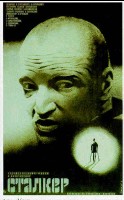
Director: Andrei Tarkovsky
Writers: Arkadi Strugatsky (novel) & Boris Strugatsky (novel)
Release Date: 15 August 1980 (Finland)
Runtime: 163 min
Country: West Germany / Soviet Union
Language: Russian
Color: Black and White / Color (Eastmancolor)
Twenty years ago, a meteorite fell to Earth, and decimated a provincial Russian town. Villagers traveled through this curious area, now known as The Zone, and disappeared. Stories purport that there is an inner chamber within The Zone called The Room that grants one's deepest wish. Fearing the consequences from such an inscrutable resource, the army immediately secured the area with barbed wire and armed patrol. But the desperate and the suffering continue to make the treacherous journey, led by a disciplined, experienced stalker who can stealthily navigate through the constantly changing traps and pitfalls of The Zone.
A successful Writer (Anatoli Solonitsyn), perhaps searching for inspiration or adventure, and a Scientist (Nikolai Grinko) searching for Truth, enlist the Stalker (Aleksandr Kaidanovsky) to guide them through The Zone. The Stalker has been trained by a renowned stalker named Porcupine, who, after an excursion with his brother into The Zone, returned alone and infinitely wealthy, only to commit suicide a week later. Soon, it is evident that reaching The Zone is not their greatest impediment, but the uncertainty over their deepest wish. As the men approach the threshold to The Room, their fear and trepidation for the materialization of their answered rayers leads to profound revelation and self-discovery.
Stalker is a visually serene, highly metaphoric, and deeply haunting treatise on the essence of the soul. Episodically, Andrei Tarkovsky uses chromatic shifts to delineate between the outside world and The Zone. Thematically (as in Solaris) the transition serves as an oneiric device to separate physical reality from the subconscious. The created barriers and imposed laws of the outside world parallel the Stalker's incoherent tracking methods for reaching The Room. Note that despite the Stalker's warning not to use the same path twice, the Scientist returns to retrieve his knapsack unharmed, casting doubt on the Stalker's navigational rules. Symbolically, it is as if the subconscious is in denial of its sincerest wish, creating its own boundaries and impediments to prevent its realization. After a circuitous route, the men arrive at the antechamber to The Room, hesitant to proceed, unable to define their innermost wish: their spiritual longing. The floor is strewn with coins, hypodermic needles, weapons, and religious icons: a reflection of the mind's search for escape from its misery. In the end, The Zone's real or imagined powers proves to be inconsequential to the weary, ambivalent seekers.
It was all in the journey.
© Acquarello 2000.
06 July 2007
Ovo je početak jednog velikog prijateljstva....
U ponedeljak, 9. jula počinjemo sa projekcijama filmova!
Spisak filmova koji sledi naravno nije konačan, i mi smo otvoreni za sve predloge i sugestije. Na naslovnoj strani bloga će biti detaljnija obaveštenja o sledećim projekcijama.
Svi vi, koji čitate ovaj blog, ste dobrodošli!!!
Filmovi će biti prikazivani, otprilike ovim redosledom:
Stalker - Andrei Tarkovsky
Solyaris - Andrei Tarkovsky
Andrey Rublyov - Andrei Tarkovsky
Zerkalo - Andrei Tarkovsky
Letyat zhuravli - Mikheil Kalatozishvili
Vozvrashcheniye - Andrei Zvyagintsev
Wild Strawberries - Ingmar Bergman
The Seventh Seal - Ingmar Bergman
The Third Man - Ingmar Bergman
The Serpents Egg - Ingmar Bergman
Roma, città aperta - Roberto Rossellini
Paisà - Roberto Rossellini
Germania anno zero - Roberto Rossellini
Il Portiere di Notte - Liliana Cavani
Amarcord - Federico Fellini
8½ - Federico Fellini
Miracolo a Milano - Vittorio De Sica
Krótki film o zabijaniu - Krzysztof Kieslowski
Krótki film o milosci - Krzysztof Kieslowski
Przypadek - Krzysztof Kieslowski
Trois couleurs: Bleu - Krzysztof Kieslowski
Trois couleurs: Rouge - Krzysztof Kieslowski
Trzy kolory: Bialy - Krzysztof Kieslowski
Metropolis - Fritz Lang
Die Blechtrommel - Volker Schlöndorff
Die Verlorene Ehre der Katharina Blum oder:
Wie Gewalt entstehen und wohin sie führen kann - Volker Schlöndorff
Christiane F. - Wir Kinder vom Bahnhof Zoo - Uli Edel
Die Bitteren Tränen der Petra von Kant - Rainer Werner Fassbinder
Satansbraten - Rainer Werner Fassbinder
Chinesisches Roulette - Rainer Werner Fassbinder
Die Sehnsucht der Veronika Voss - Rainer Werner Fassbinder
Rashômon - Akira Kurosawa
Ikiru - Akira Kurosawa
Shichinin no samurai - Akira Kurosawa
Dreams - Akira Kurosawa
Sostiene Pereira - Roberto Faenza
Lisbon Story - Wim Wenders
Paris, Texas - Wim Wenders
Dogme # 1 - Festen - Thomas Vinterberg (uncredited)
Dogme # 2 - Idioterne - Lars Von Trier (uncredited)
Dogme # 3 - Mifunes sidste sang - Søren Kragh-Jacobsen (uncredited)
Dogme # 12 - Italiensk for begyndere - Lone Scherfig (uncredited)
Dogme # 18 - Et rigtigt menneske - Åke Sandgren (uncredited)
Dogme # 28 - Elsker dig for evigt - Susanne Bier (uncredited)
Ariel - Aki Kaurismäki
Tulitikkutehtaan tyttö - Aki Kaurismäki
Kauas pilvet karkaavat - Aki Kaurismäki
Mies vailla menneisyyttä - Aki Kaurismäki
Laitakaupungin valot - Aki Kaurismäki
Los Olvidados - Luis Buñuel
Belle De Jour - Luis Buñuel
The Discreet Charm of the Bourgeoisie - Luis Buñuel
Fando y Lis - Alejandro Jodorowsky
The Holy Mountain - Alejandro Jodorowsky
Matador - Pedro Almodóvar
La Ley del deseo - Pedro Almodóvar
Mujeres al borde de un ataque de nervios - Pedro Almodóvar
¡Átame! - Pedro Almodóvar
Tacones lejanos - Pedro Almodóvar
Kika - Pedro Almodóvar
La Flor de mi secreto - Pedro Almodóvar
Carne trémula - Pedro Almodóvar
Todo sobre mi madre - Pedro Almodóvar
Hable con ella - Pedro Almodóvar
La Mala educación - Pedro Almodóvar
Volver - Pedro Almodóvar
. . .


